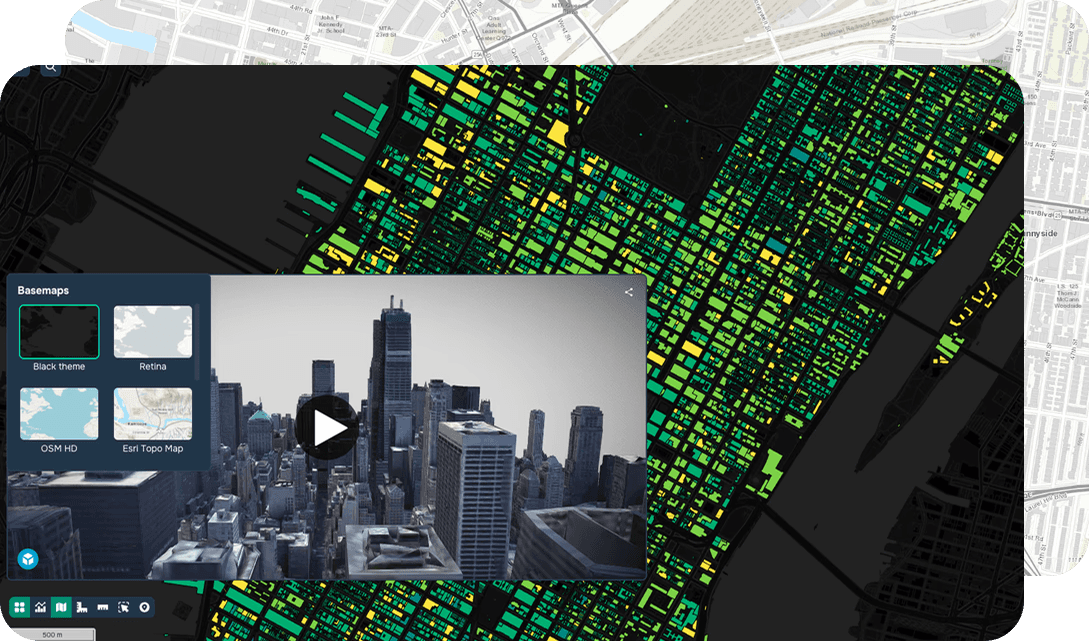
Retail Customer Segmentation
Definition
Retail customer segmentation is a spatial analysis methodology that leverages GIS technology to classify and group consumer populations based on geographic, demographic, and behavioral attributes tied to specific locations. By integrating geospatial data sources — including census demographics, purchasing patterns, foot traffic metrics, and point-of-interest datasets — analysts can generate high-resolution spatial profiles of customer clusters across defined trade areas and market boundaries.
Using GIS platforms, geospatial analysts apply techniques such as kernel density estimation, spatial clustering algorithms, and choropleth mapping to visualize how distinct customer segments are distributed across a landscape. These workflows often incorporate geocoded transaction records, drive-time polygons, and geodemographic classification systems like Esri Tapestry or CACI Acorn to enrich the analytical layer.
The practical benefits of this GIS use case are substantial. Retailers gain actionable intelligence to optimize store placement, tailor localized marketing campaigns, allocate inventory more efficiently, and identify underserved market opportunities. By grounding customer segmentation in spatial context, organizations transform abstract consumer data into mapped, decision-ready insights that directly support competitive retail strategy and site selection planning.
FAQ
What is retail customer segmentation in GIS?
Retail customer segmentation is a spatial analysis methodology that uses GIS technology to classify consumer populations based on geographic, demographic, and behavioral attributes tied to specific locations. By integrating geospatial data sources such as census demographics, purchasing patterns, and foot traffic metrics, analysts build high-resolution spatial profiles of customer clusters across defined trade areas and market boundaries. This approach transforms raw consumer data into mapped, decision-ready insights that support competitive retail strategy.
How is GIS technology applied in retail customer segmentation?
GIS platforms enable analysts to apply techniques such as kernel density estimation, spatial clustering algorithms, and choropleth mapping to visualize how distinct customer segments are distributed across a landscape. Workflows commonly incorporate geocoded transaction records, drive-time polygons, and geodemographic classification systems like Esri Tapestry or CACI Acorn to enrich the analytical layer. These geospatial tools allow retailers to move beyond traditional demographics and uncover location-based patterns in consumer behavior.
What are the practical benefits of using GIS for retail customer segmentation?
Retailers gain actionable spatial intelligence to optimize store placement, tailor localized marketing campaigns, and allocate inventory more efficiently across their store network. GIS-driven segmentation also helps organizations identify underserved market opportunities within specific trade areas and geographic regions. By grounding customer analysis in spatial context, businesses can make more precise, data-driven decisions that directly strengthen their retail site selection and market expansion strategies.
What geospatial data sources are typically used to implement retail customer segmentation?
A robust retail customer segmentation workflow typically integrates multiple geospatial data sources, including census demographic datasets, point-of-interest (POI) data, foot traffic metrics, and geocoded transaction records. Geodemographic classification systems such as Esri Tapestry Segmentation are commonly layered into GIS platforms to enrich customer profiles with lifestyle and socioeconomic attributes tied to geographic areas. Combining these datasets within a GIS environment allows analysts to produce detailed, spatially accurate customer segment maps across defined market boundaries.