Buying Behavior
Definition
Buying behavior analysis examines how purchasing patterns vary across locations. Factors include income, accessibility, cultural preferences, and competition. Understanding spatial differences in consumer behavior helps businesses tailor products, pricing, and marketing strategies. The objective is to align offerings with local demand. Location-aware insight transforms raw sales data into actionable market intelligence.
FAQ
What is buying behavior analysis in GIS?
Buying behavior analysis in GIS examines how consumer purchasing patterns vary across geographic locations, incorporating factors such as income levels, cultural preferences, accessibility, and local competition. By mapping spatial differences in consumer demand, businesses can better understand why sales performance differs from one area to another. This location-aware approach transforms raw sales data into actionable market intelligence tailored to specific regions.
How is GIS applied to analyze buying behavior?
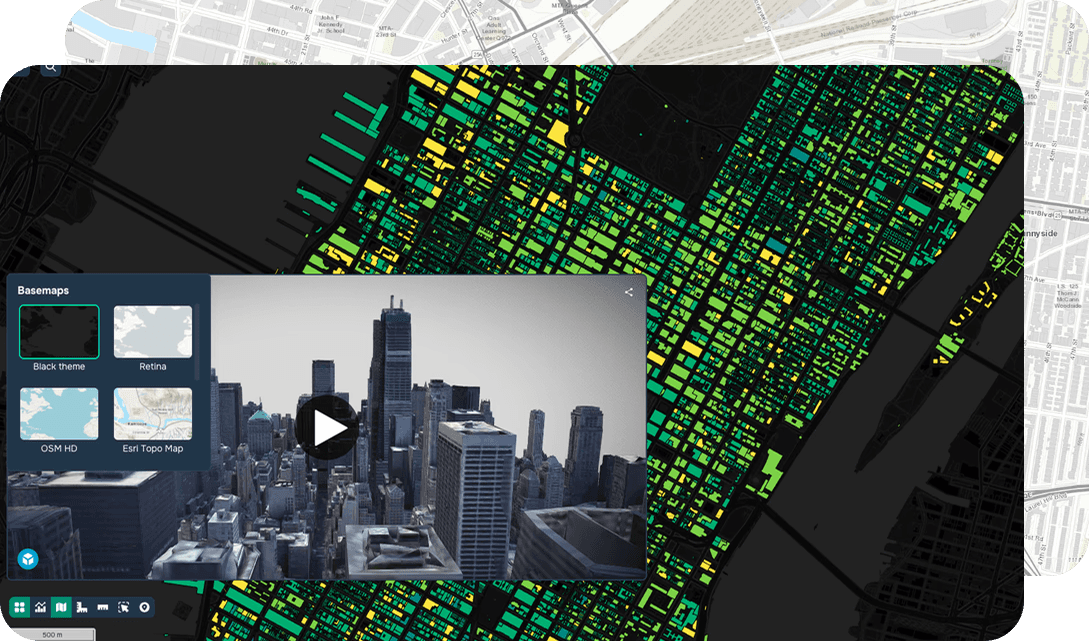
GIS applies spatial analysis techniques to overlay consumer transaction data with demographic layers, road networks, points of interest, and competitor locations to reveal purchasing trends across a geographic area. Tools such as heat maps, trade area analysis, and spatial clustering help identify high-demand zones and underserved markets. This geospatial approach enables businesses to visualize and interpret complex buying patterns that traditional data analysis methods would miss.
What are the practical business benefits of using GIS for buying behavior analysis?
Using GIS for buying behavior analysis allows businesses to tailor their products, pricing, and marketing strategies to align with localized consumer demand, improving campaign effectiveness and return on investment. Retailers and brands can make smarter decisions about store placement, inventory management, and targeted advertising by leveraging location intelligence. The result is a more precise understanding of regional markets that drives competitive advantage.
What data sources and GIS tools are typically used to implement buying behavior analysis?
Implementing buying behavior analysis in GIS typically involves integrating point-of-sale transaction data, census demographic datasets, mobility data, and land use layers within platforms such as Esri ArcGIS, QGIS, or cloud-based spatial analytics tools. Spatial joins, kernel density estimation, and geospatial machine learning models are commonly used to identify statistically significant purchasing patterns across territories. Ensuring data accuracy and maintaining updated geospatial datasets are critical for producing reliable, actionable insights.